From Anecdotal Lessons to Lasting Improvements: How Disaster Preparedness Is Advancing with Cruiser and AI at the Edge
North Dakota doesn't get much attention as wildfire country, but this year is different. In August, Governor Kelly Armstrong declared a statewide fire emergency as drought spread across more than half the state. By the end of September, the state had logged 49 wildfires — nearly triple the number of last year. Red flag fire warnings stretched across North and South Dakota into September, a reminder of how fast conditions can turn, and how much it matters to get the right resources to the right place before fires reach populated areas.
Wildfires can also stretch responders far beyond the fire line. Large incidents are staffed by crews from local, state, and federal partners, and often assembled from national rosters. A single fire can require anywhere from 200 to 4,000 firefighters. When several fires burn at once, those same people are needed in several places, and single states can’t always staff a major fire on their own. Washington's Department of Natural Resources, for example, has sent crews to wildland fires to Texas, New Mexico, South Dakota, and Arizona. We looked at how Washington DNR keeps these multi-agency operations connected with Atlas earlier this year.
The work doesn't end when the flames are out. Rebuilding a community takes years. In Paradise, California, the 2018 Camp Fire destroyed thousands of homes; seven years later only about 40% had been rebuilt. Some estimates say that a full recovery could take 10 to 20 years. Every hour saved during the response, and every lesson learned, helps limit damage and what has to be rebuilt.
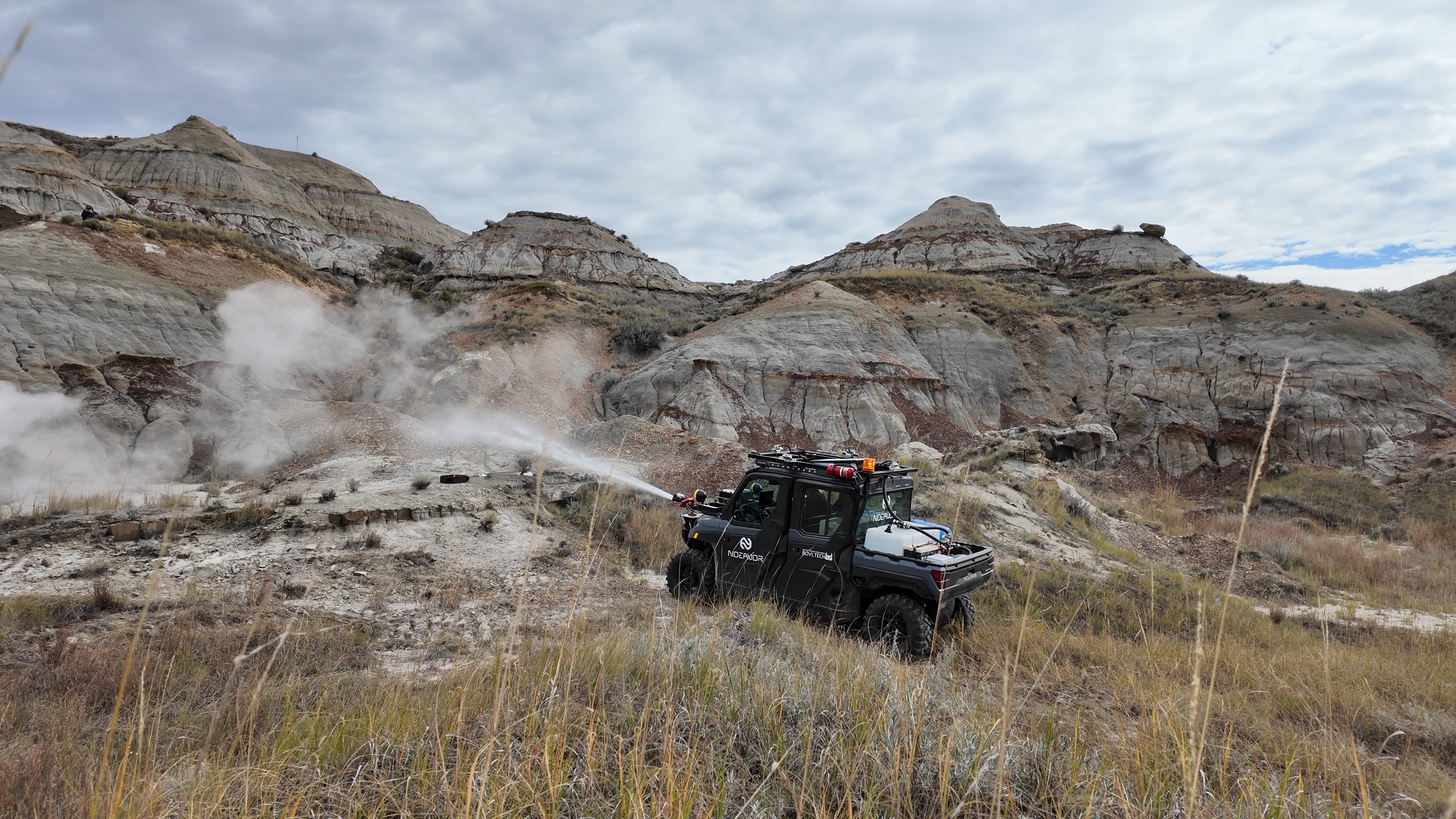
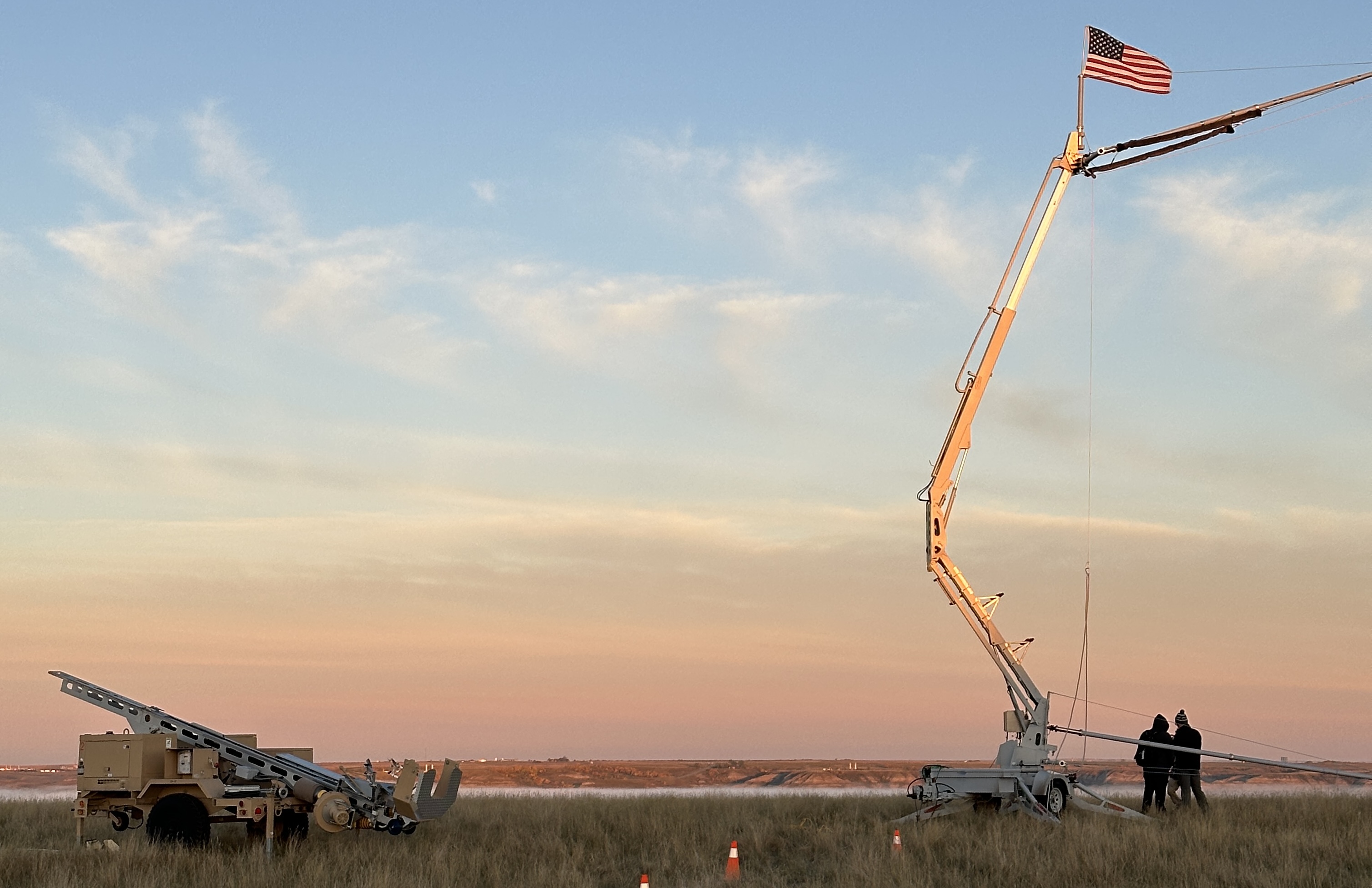
In September, Armada supported Project Unity Forward, a multiagency search-and-rescue and wildfire-response exercise near Williston, North Dakota. For roughly six hours, people from the North Dakota Air National Guard's 119th Wing, emergency management, law enforcement, and more than 20 federal, state, and local agencies worked through a simulated wildfire incident. This included live participation from an MQ-9 unmanned aircraft flown by the Air National Guard.
At the center of it all sat Armada's Cruiser, a 20-foot modular data center providing on-site compute, storage, networking, power, cooling, and satellite connectivity. The Cruiser hosted applications built by Armada's partner NDeavor, along with a local Team Awareness Kit (TAK) server, a situational-awareness platform widely used across the military and emergency response.
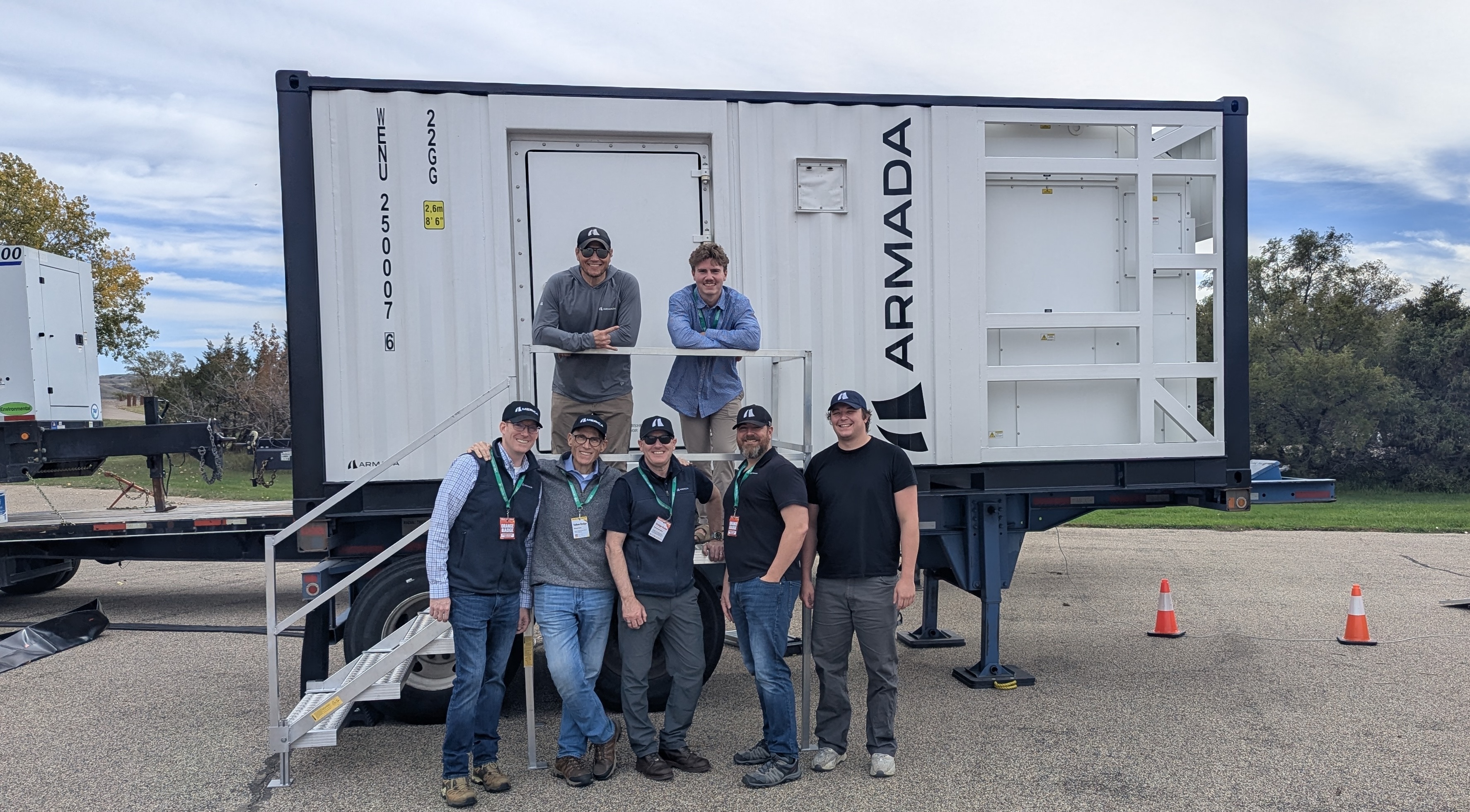 The Air National Guard shared its requirements with NDeavor, including the need for everything to run at the edge. Over the past couple of months NDeavor's team built to these specifications, using Armada compute to develop and test. This project was the first time those applications were launched in the field. Participants registered their phones and radios and were geotagged. NDeavor's software turned radio discussions into text, giving commanders a running, real-time read on what was happening throughout the day. Armada's team supported the technical integration and exercise operations alongside them. Together, this gave every agency on the ground a single, shared operational picture.
What that looked like in practice
Radio transcription and search: Every radio transmission was transcribed and preserved as it happened, so responders could ask, in plain language, who said what, when, and where a transmission originated.
Video and imagery analytics: Incoming feeds were analyzed automatically to flag fires, smoke, injured personnel, assets, and other points of interest for responders to review.
A shared operational picture: TAK and NDeavor's enhanced common operating picture combined live asset locations, field reports, and sensor data, giving incident commanders a single source of truth throughout the day.
Automated after-action reporting: As soon as the exercise ended, the data captured throughout the day was used to reconstruct the incident timeline and generate a full after-action report.
A record, not just a memory
Accurate reconstruction is the game changer. In a typical exercise, the lessons learned are anecdotal. A debrief is built from memory and a handful of scattered notes. Most of the value evaporates soon after everyone goes home. This time, within minutes of Project Unity Forward wrapping, every agency had the same AI-generated summary: what was accomplished, what worked, what didn't, and what to do differently next time.
That matters because different agencies have very different missions. Regardless of this, state troopers, the Department of Transportation, emergency management, and more, all walked away with a documented, shared understanding of where the gaps are, instead of twenty separate accounts.
Compute that goes where the mission is
This is also a preview of something bigger than one exercise. Armada’s Cruiser wasn't stationed next to the command post; it operated roughly 30 minutes away, powering the systems the response depended on without needing to sit at the center of the action. That's the model we build toward more broadly: compute that goes wherever the mission needs it, independent of where people happen to be standing, and that keeps working when the rest of the operation has to move.
The partnership works on multiple levels. NDeavor understands what responders need and builds for it. Armada makes sure the compute is already there, at the edge, early enough to build and test against. Together, that turned a requirement from the field into a working capability in a couple of months.
NDeavor CEO Brenda Wyland explains further: “Working with Armada allowed us to take technologies we've been developing to the next level. Their edge computing capabilities gave us the infrastructure to deploy and test more advanced applications in the field, accelerating our progress toward solutions that can make a meaningful difference for emergency responders. It's a great example of how bringing the right partners together in North Dakota can advance technology and strengthen our state's capabilities.”
Project Unity Forward was a drill. But the problems it addressed, like fragmented coordination, lost institutional knowledge, and response times that depend on how fast people can physically get somewhere, aren't hypothetical. In North Dakota or anywhere else wildfires are becoming more frequent and more dangerous; these are real and present dangers.
U.S. Air Force Brigadier General Mitch Johnson, Adjutant General of the North Dakota National Guard, described what this meant for his team: “We are fortunate in North Dakota to partner with innovative teams that continue to push our capabilities forward. During this exercise, we leveraged artificial intelligence to rapidly process multiple sources of information and gain a clear understanding of the situation in real time. This technology supported everything from timely updates to producing after action reports once the exercise concluded. Our Soldiers and Airmen are gaining valuable exposure to advanced AI tools, and these enhancements will help us shorten timelines and ultimately operate faster and more effectively.”
Armada's role in exercises like this one is a step toward making sure that the next time the alarm goes off for real, the infrastructure to coordinate a response is already on-site, connected, and learning. Disaster response workers deserve to harness the power of AI and handle every successive emergency more successfully than the last.
